Last updated: August 23, 2026
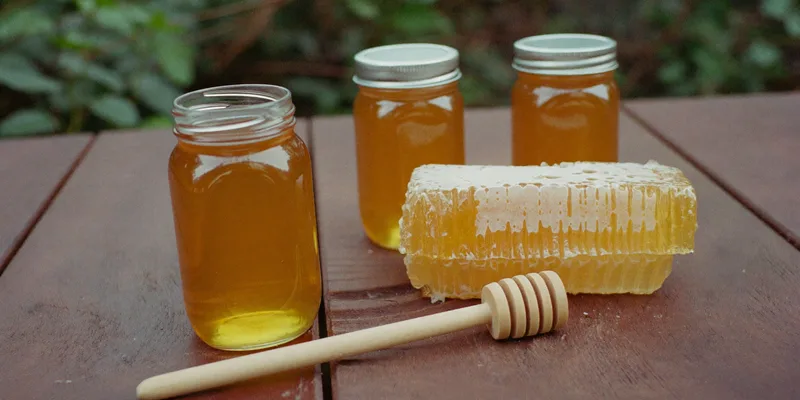
Honey is the one thing on this site that does not need preserving. It arrives shelf stable, it stays shelf stable, and no amount of canning gear will improve on that. What honey needs is a container it can be poured out of without making a mess, and a label that survives sticky fingers.
That sounds simple until you have thirty pounds of extracted honey in a bucket and a decision to make about what it goes into. Jar shape decides how easy it is to get the last of it out, lid choice decides whether it drips down the side, and size decides whether you are gifting or selling. Here is how to pick without buying three wrong cases first.
This article contains affiliate links. If you buy through them, we may earn a commission at no extra cost to you. Learn more.
Quick Answer
Which jars should you put honey in?
- Straight sided glass jars with a wide opening, so crystallized honey can be scooped or gently rewarmed and poured.
- Eight ounce and twelve ounce are the gifting and farm stand sweet spot, pints and quarts for your own kitchen.
- Squeeze bottles beat jars for daily table use, hex jars and muth jars beat both for gifts.
- Honey is not canned, so you do not need canning lids, but you do need a genuinely airtight closure.
Bottom line: pick by how the honey leaves the jar, since crystallization makes a narrow neck a permanent nuisance.
Honey Does Not Get Canned, and That Changes the Jar
Raw honey is already low in moisture and high in sugar, which is why it keeps at room temperature without processing. There is no water bath step, no headspace rule and no seal to verify. That frees you from canning jar geometry entirely, and it means the two piece lid system is optional rather than required.
What you still need is a genuinely airtight closure. Honey pulls moisture out of humid air, and honey that takes on moisture can start to ferment. A one piece lid with a liner, or a plastic storage cap on a mason jar, does that job as well as a canning lid and screws on and off without a band to lose.
Crystallization Decides the Jar Shape
Every honey crystallizes eventually, some varieties in weeks and some in a year, and that is a normal change rather than spoilage. The consequence for jar choice is straightforward: a wide, straight sided jar lets you get a spoon in and lets warm water reach the sides evenly. A jar with a narrow neck and a shoulder becomes a small archaeological dig.
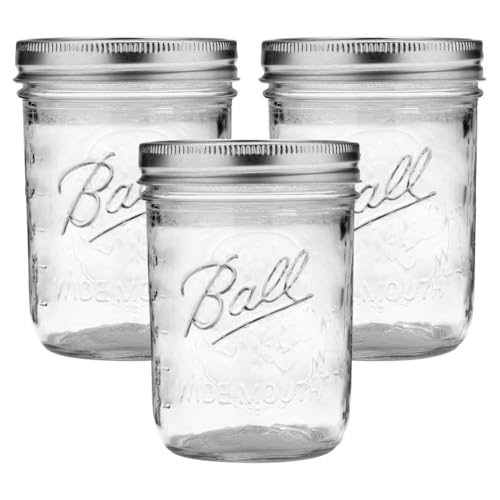
Wide mouth mason jars are the practical default for anyone keeping honey for their own kitchen. Straight sided means no shoulder for crystal to hide under, and the three inch opening means a spoon or a spatula gets to the bottom corners.
Warming Crystallized Honey
Gentle warm water around the jar brings crystallized honey back to liquid. Glass tolerates this and plastic squeeze bottles generally do not, which is a real argument for keeping the bulk of your honey in glass and only filling a squeeze bottle as needed. Avoid boiling water and avoid a microwave, both of which heat unevenly and can crack a jar.
Honey Jars by Situation
Gifting and Farm Stand Sales
Eight ounce and twelve ounce glass jars are the size people actually reach for. Small enough that you can give away a dozen from one harvest, large enough to feel like a real gift rather than a sample. Classic hex jars with gold lids are the shape most buyers associate with honey, which is worth more at a table than a plain jar.

Your Own Kitchen Supply
Pint or quart wide mouth mason jars, with plastic storage caps rather than canning lids. They stack, they take a spoon, they survive a warm water bath when the honey sets, and you almost certainly already own some. This is the cheapest way to store the bulk of a harvest in usable portions.
The Jar That Lives on the Table
A squeeze bottle with a flip top or a silicone valve is the honest answer for daily use, because it does not drip down the side and does not need a spoon. Keep it as the working container and refill it from a glass jar. Plastic is the trade off, so do not put a squeeze bottle in warm water to decrystallize it.

Labels That Survive Sticky Hands
Honey labels take more abuse than jam labels because the jar itself gets handled with honey on it. Waterproof vinyl labels or a printed roll designed for jars hold up where paper stock softens and peels. If you sell any of it, check your own state’s cottage food labeling requirements, which vary and are not something an article can settle for you.

Honey Jar Sizes and What They Suit
| Size | Typical use | Shape that works | Notes |
|---|---|---|---|
| 4 oz | Samples, wedding favors, variety sets | Hex or small muth jar | Cost per jar dominates at this size |
| 8 oz | Gifts, farm stand, first time buyers | Hex, queenline or straight sided | The most common retail honey size |
| 12 oz | Repeat buyers, larger gifts | Queenline or squeeze bottle | One pound of honey is close to twelve fluid ounces |
| Pint and quart | Your own kitchen, bulk from a harvest | Wide mouth straight sided mason | Best shape for scooping crystallized honey |
Honey is sold by weight and jars are marked in fluid ounces, so check the listing rather than assuming an eight ounce jar holds eight ounces of honey by weight.
One Safety Note Worth Printing on the Label
Honey should not be given to babies under twelve months. The CDC advises against honey before twelve months because it can contain Clostridium botulinum spores that can grow in an infant’s immature gut and cause infant botulism. The spores survive baking and heating, so honey in baked goods and teas carries the same caution.
If you give jars away, a line on the label is a reasonable courtesy. It costs nothing and it removes any chance that a jar with a homemade label ends up somewhere it should not.
Frequently Asked Questions
Do honey jars need canning lids? No. Honey is not processed, so there is no seal to form. Any genuinely airtight closure works, and a one piece lid or plastic storage cap is easier to use repeatedly than a two piece canning lid.
Why did my honey turn solid and grainy? It crystallized, which is normal and not spoilage. Set the jar in warm water and let it come back gradually. This is exactly why a wide straight sided jar beats a narrow necked one.
Glass or plastic for honey? Glass for storage, plastic for the bottle on the table. Glass takes warm water to decrystallize and does not scratch or hold odors, plastic squeeze bottles pour cleanly but should not be warmed.
What size honey jar sells best at a farm stand? Eight ounce is the standard entry size and twelve ounce is the common repeat buyer size. Four ounce jars work as favors and variety packs but the jar cost eats the margin.
Can I reuse mason jars for honey? Yes, and it is one of the better uses for jars that are no longer pristine enough for canning. Wash and dry them thoroughly, since any moisture left in the jar works against you.
Is honey safe for babies? Not under twelve months. The CDC advises against giving honey to children younger than twelve months because of the risk of infant botulism, including honey cooked into other foods.
The Bottom Line
Choose honey jars by how the honey comes back out, not by how the jar looks on the shelf, because crystallization is a matter of when rather than if. Wide straight sided glass for anything you keep, hex or queenline jars in eight and twelve ounce for anything you give away, and a squeeze bottle as the working container on the table. Skip the canning lids, since there is nothing to process. If you are also putting up preserves this season, our jam jars guide and canning labels guide cover the two decisions that come right after the jar itself.