Last updated: August 23, 2026
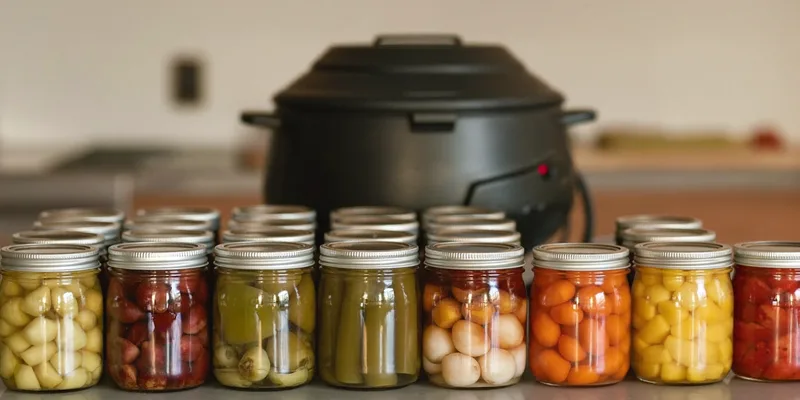
Electric pressure canners promise the thing a lot of would be canners want most: pressure canning without a stove that can handle a heavy canner, without babysitting a burner dial, and without the noise of a rocking weight. Plug it in, load the jars, press a button. For a kitchen with a fragile glass cooktop or an apartment range that cannot hold temperature, that is a real solution.
It is also the corner of canning where marketing and food safety guidance are furthest apart, and where an honest answer matters more than an enthusiastic one. This guide explains what these machines actually are, what the safety guidance says about them, and who should buy one anyway.
This article contains affiliate links. If you buy through them, we may earn a commission at no extra cost to you. Learn more.
Quick Answer
Is an electric pressure canner safe to use?
- USDA processing recommendations were developed on stovetop pressure canners, and the NCHFP has not extended them to electric appliances.
- A purpose built electric canner should therefore be used only with the recipes and programs its own manufacturer supplies and has validated, which is what Presto states for its Precise Digital model.
- An Instant Pot or a general multicooker is a different thing entirely and is not a canner.
- The USDA does not certify appliances, so any listing that suggests an appliance carries an official approval is describing marketing, not policy.
Bottom line: a purpose built electric canner used strictly within its own manual is a legitimate tool, and a stovetop canner remains the reference standard.
What an Electric Pressure Canner Is
An electric pressure canner is a countertop appliance with a sealed pot, a heating element, and a controller that runs a canning program from venting through processing to depressurizing. Unlike a multicooker, it is built and marketed specifically for canning jars, and the better ones hold several quart jars upright as a stovetop canner does.
What it removes is the manual work: no burner adjustments, no watching a dial, no listening for the weight. What it adds is a dependence on the machine’s own program being correct for the food you put in it, which is where the safety discussion starts.
Where the Safety Guidance Actually Stands
USDA processing recommendations for low acid foods were developed and validated on standard stovetop pressure canners, and the NCHFP has not extended those processes to electric appliances. That is a statement about testing, not an accusation: the processes exist for one kind of equipment and have not been re run for another.
The practical consequence is straightforward. If you use an electric canner, use it only with the recipes and processing programs the manufacturer supplies and states it has validated for that machine, and do not transfer a stovetop time and pressure into it. Presto, for example, publishes its own recipe set for the Precise Digital Pressure Canner and directs owners to use it.
Multicookers Are a Separate Question
An Instant Pot or similar multicooker is not a canner, whatever a canning button on the panel might imply. It does not hold a verified pressure across a full load of jars in the way canning processes assume, and the NCHFP does not recommend it for low acid canning. Our article on Instant Pot canning covers this in full, and pressure canners versus pressure cookers explains the underlying difference.
What They Do Well
Consistency is the honest selling point. A controller holds the target pressure without the burner fiddling that causes liquid loss in stovetop canning, and it will not wander off while you answer the door. For anyone who found the stovetop learning curve stressful, that steadiness is worth something real.
The second is placement. An electric canner runs on a counter, in a garage, or on a porch, which solves the glass cooktop weight problem outright and keeps the heat out of an August kitchen. Owners with induction ranges that cycle power on and off often find an electric unit easier than fighting the range.
What They Do Not Do
Capacity is the first limit. Most electric canners hold noticeably fewer quart jars than a large stovetop canner, so a harvest sized batch becomes two or three loads. The second is flexibility: you are bound to the manufacturer’s recipe set rather than the full library of tested USDA processes.
The third is repairability. A stovetop canner is a pot with a gasket and a gauge, and parts are available for decades. An electric canner is an appliance with a control board, and when that fails the machine is generally done. Weigh that against the convenience before spending.
The Models People Compare
The Purpose Built Digital Canner
Presto’s Precise Digital Pressure Canner is the model most often bought by people specifically wanting an electric canning appliance rather than a multicooker, and Presto supplies its own validated recipe set with it. Used with that recipe set and that machine, it is doing what it was designed and tested to do.

The Other Countertop Canner
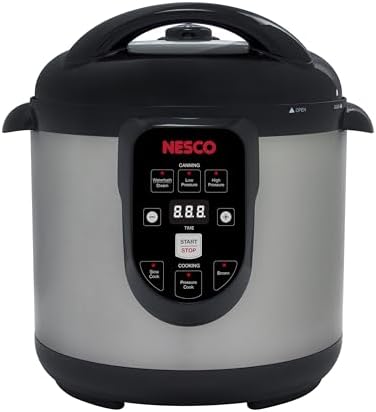
The Nesco smart canner and cooker covers similar ground with its own program set and doubles as a cooker between seasons. As with any electric unit, the manufacturer’s own instructions are the operating authority, not a stovetop chart.
The Stovetop Alternative Worth Pricing First
If your range can carry it, a conventional stovetop canner gives you the entire library of tested USDA processes, a larger load, and parts availability that outlives most appliances. It is the reference standard, and for many kitchens it is also the cheaper answer.

Electric, Stovetop, and Multicooker Compared
| Appliance | Low acid canning | Which processes apply | Typical load |
|---|---|---|---|
| Electric pressure canner | Manufacturer’s program only | The maker’s own validated recipe set | Smaller than a full stovetop load |
| Stovetop pressure canner | Yes | Full USDA and NCHFP process library | Up to a double layer of pints |
| Multicooker such as an Instant Pot | Not recommended | None; NCHFP advises against it | Not applicable |
| Boiling water canner | No, high acid only | Water bath processes | Seven quarts typically |
The middle column is the one that matters. A canner is only as safe as the tested process you can legitimately apply to it.
If You Buy One, Use It Like This
Read the manual before the first load and keep the manufacturer’s recipe book with the machine rather than in a drawer. Use the jar sizes it lists, the headspace it lists, and the program it names for that food. Do not substitute a stovetop time, and do not scale a recipe up because there is room.
Treat the gasket as a wear part, keep the vent and float valve clean, and check the seal before every session. The failure reports that show up in owner reviews are dominated by units that lose pressure through a dirty or aging gasket, which is the same wear item stovetop canners have.
Frequently Asked Questions
Can I use USDA recipes in an electric pressure canner? Not by transferring the times directly. USDA processes were developed on stovetop canners and the NCHFP has not extended them to electric appliances, so use the recipes and programs the manufacturer supplies and states it validated for that machine.
Is the Presto Precise a real canner or a multicooker? It is built and sold as a canning appliance with its own validated recipe set, which puts it in a different category from a general multicooker. That distinction is about testing, and it still means following Presto’s own instructions rather than a stovetop chart.
Can I can green beans in an Instant Pot? No. The NCHFP does not recommend multicookers for pressure canning low acid foods, and Instant Pot’s own materials do not present the appliance as a low acid canner. Our Instant Pot canning article explains why.
How many jars does an electric canner hold? Fewer than a large stovetop canner, typically a single layer, so plan on multiple loads for a harvest sized batch. Check the specific model’s stated jar capacity before buying.
Do I still need to adjust for altitude? Yes, and the machine’s manual will say how it handles elevation. Altitude changes what pressure is required, which is true of every pressure canning method.
Should I buy electric or stovetop? If your range can carry a stovetop canner, buy that first for the process library and the capacity. If your cooktop cannot take the weight or your range cannot hold a steady boil, a purpose built electric canner used within its own manual is a reasonable answer. Our pressure canner guide compares the stovetop options.
The Bottom Line
An electric pressure canner solves a genuine problem for kitchens that cannot host a heavy stovetop canner, as long as you accept the trade: you are following the manufacturer’s validated recipe set rather than the full USDA library, and you are canning smaller loads. Anyone whose stove can take a conventional canner should price that first. Read next: choosing a stovetop pressure canner and how the pressure canning process runs.