Last updated: August 23, 2026
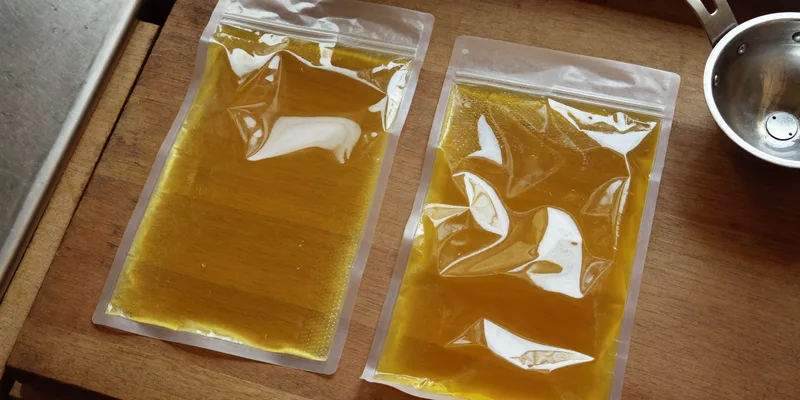
You make a big pot of stock, you portion it into bags, you start the cycle, and a thin brown line climbs the bag, crosses the seal bar and disappears into the machine. The seal comes out wet and cloudy, it fails within a day, and now there is broth somewhere inside a device you cannot open. Everyone who owns a countertop sealer has done this at least once.
It is not a defect and it is not user error either. It is what a suction machine does by design, and there are three good ways around it. Two of them are free and take a change in routine, and the third is a different machine. Work through them in that order, because most people never need the third.
This article contains affiliate links. If you buy through them, we may earn a commission at no extra cost to you. Learn more.
Quick Answer
How do you vacuum seal soup without ruining the machine?
- Freeze it first. A solid block of stock behaves like a steak and seals with no drama at all.
- Use the moist setting, which shortens the vacuum stage so the seal fires before liquid arrives.
- Learn the manual seal button, so you can stop the pump the moment the liquid starts to move.
- If liquid is routine rather than occasional, a chamber machine removes the problem instead of managing it.
Bottom line: pre freezing solves it for free. A chamber sealer solves it for good.
Why the Liquid Ends Up Inside the Machine
A countertop sealer removes air by pulling it through the open mouth of the bag. Whatever else is loose in there follows the same path. As the film collapses it also squeezes the contents upward, so the liquid level rises toward the bar just as the suction is at its strongest.
Chamber machines avoid it entirely because the air leaves the box and the bag together, so nothing is being drawn through the bag mouth. That is a design difference, not a quality difference, and it is why no amount of money spent on a suction machine makes the problem go away.
The Free Fixes, in the Order to Try Them
Start with routine changes. Four of them cover almost every liquid job people do at home, and none of them costs anything. Only move to hardware after these have failed on the specific food you keep struggling with.
Freeze It Solid First
Portion the soup or stock into a container, a silicone tray or a bag standing upright in a loaf pan, freeze it through, then pop the block out and seal it. This is the fix that works every time, and its only cost is planning a day ahead. Frozen blocks also stack better than sealed liquid ever does.
Use the Moist Setting, Not the Dry One
Moist mode shortens the vacuum stage and fires the seal earlier, which is exactly the trade you want. Anova describes its moist mode as reducing suction so the bag seals without fluid being drawn into the system, and most brands implement the same idea under different names.
Take Manual Control of the Cycle
Most machines have a seal only button that interrupts the pump. Watch the liquid, and when it reaches roughly the halfway point between the food and the bar, press seal. You lose some vacuum and you keep the broth in the bag, which is the right trade for a fridge or freezer pack.
Give the Liquid Somewhere to Stop
Leave a long tail above the food, fold a strip of paper towel inside the bag just below the seal line to catch a surge, and keep the bag hanging down over the counter edge so gravity works with you. Three small habits that together prevent most of the near misses.
If Your Machine Already Got Wet
Empty and wash the drip tray, which is the part designed to catch exactly this. Then leave the lid open and the machine unplugged somewhere warm and dry for a day or two, because residual moisture in the vacuum path is what turns one spill into a machine that never pulls properly again.
If it still will not hold a vacuum after drying, the foam gaskets are the next suspect, since dried on stock stiffens them. FoodSaver support puts gasket inspection and cleaning first for a machine that cannot hold a vacuum, and our troubleshooting walkthrough runs the full sequence in order.
When the Machine Really Is the Answer
If you make stock by the gallon, brine meat in bulk, or portion chili every fall, the workarounds stop being clever and start being a chore. At that point the hardware is the honest recommendation, and there are two routes to it.
The Full Solution: a Chamber Machine
Avid Armor lists the USV32 with an 11.5 inch seal bar, a glass lid and an accessory hose port, and markets it specifically for soups, sauces, marinades and other liquid rich food, because the pressure equalizes inside and outside the bag instead of pulling through the mouth.

The Compact Route: a Chamber Machine That Also Does Jars
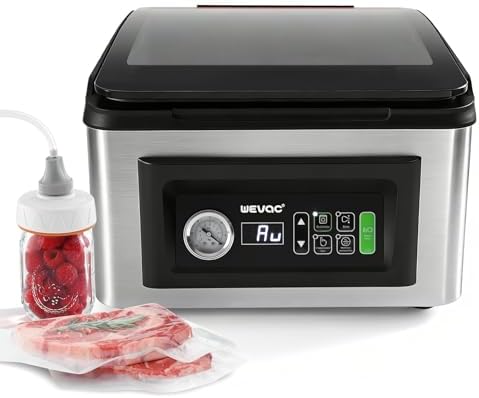
Wevac lists the CV10 as a chamber sealer with an external vacuum function and an included hose for accessory bags and canisters, plus an automatic mode that adapts to the load and a timed manual mode for delicate items. One shelf, both jobs.
The Middle Route: Better Controls on a Countertop Machine
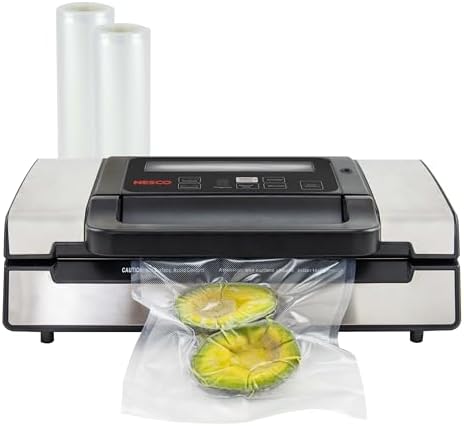
If a chamber machine will not fit, buy a countertop sealer with real moisture control. Nesco lists the VS-12 with dry, moist and double seal settings plus a normal and gentle vacuum choice and a pulse function, which is the control set you want when the food is wet and the seal has to hold.
The Sidestep: Rigid Containers
For fridge storage of soup, sauce and stock, a vacuum container with an accessory hose skips the bag problem completely. It is not a freezer solution for months of storage, and it is excellent for the week ahead. More in our container guide.

Which Method for Which Liquid
Thin liquids like stock and brine behave differently from thick ones like chili or sauce, and small portions behave differently from quarts. The table lines up the four approaches against the jobs people actually bring to them.
| Method | Works well for | Fails on | Cost |
|---|---|---|---|
| Pre freeze into blocks | Stock, soup, sauce, anything portioned | Same day sealing | Free, needs planning |
| Moist mode plus manual seal | Marinated meat, thick stews | Thin liquid in quantity | Free |
| Chamber machine | Everything wet, including quarts | Small kitchens and small budgets | The machine |
| Vacuum containers | Fridge storage for the week | Long freezer storage | Containers and a hose |
Marinating is the one case where a container beats everything, because the vacuum draws marinade into the meat and you are not trying to store it long anyway.
One Thing Sealing Liquid Does Not Do
It does not make the soup shelf stable. Vacuum packaging is not a canning method, and the National Center for Home Food Preservation says so plainly. USDA guidance on reduced oxygen packaging notes that removing oxygen creates favorable conditions for Clostridium botulinum, an organism that thrives without air.
So a sealed bag of stock goes in the refrigerator or the freezer, never on a pantry shelf. If you want stock and soup at room temperature, that is pressure canning, because low acid foods cannot be safely processed any other way at home according to NCHFP guidance.
Frequently Asked Questions
Can I vacuum seal soup without freezing it first? On a suction machine, only in small amounts with the moist setting and a manual seal, and you will still get the occasional wet seam. A chamber machine does it as a matter of course.
Did I ruin my sealer by pulling broth into it? Usually not. Empty the drip tray, dry the machine open and unplugged for a day or two, and test on a dry bag. If it still will not hold, look at the gaskets before assuming pump damage.
Does the moist setting weaken the seal? It changes the trade. You get a slightly shallower vacuum and a seal made before liquid reaches the bar, which is the better outcome for wet food. Many machines pair it with a double seal for exactly this reason.
Can I seal liquid in a mason jar instead? For refrigerator and freezer storage, yes, with a jar attachment. Leave real headspace if it is going in the freezer, since liquid expands. See the jar sealer guide.
Why does my bag lose vacuum a day later? Liquid or fat in the seal line, almost always. Wipe the bag mouth before sealing and run a second seal below the first, and check the film thickness in the bag guide.
The Bottom Line
Freeze liquids into blocks and the problem disappears without spending anything, and that alone is enough for most households. Learn the moist setting and the manual seal button for the times you cannot plan ahead. If soup, stock and brine are a regular part of your year, a chamber machine is the honest answer, because it removes the mechanism that causes the problem rather than working around it. Whatever you use, the sealed bag is a freezer or fridge item, not a pantry one. Read next: whether a chamber machine fits your kitchen and the full sealer type comparison.