Last updated: August 23, 2026
Nobody’s first vacuum sealer is a chamber machine. People arrive here after a countertop sealer has annoyed them for a year: stock pulled into the drip tray, a freezer full of packs that came loose over winter, a stack of embossed bag boxes that never seems to go down. The chamber machine is the answer to a specific set of frustrations, not a general upgrade.
It is also a genuinely large object that lives on a counter or a basement shelf and weighs more than most kitchen appliances put together. Deciding whether that trade makes sense is easier once you know exactly which of your problems it solves and which it does not touch at all.
This article contains affiliate links. If you buy through them, we may earn a commission at no extra cost to you. Learn more.
Quick Answer
Is a chamber vacuum sealer worth it at home?
- Yes if you seal liquids. Soup, stock, brine and marinade are what a suction machine cannot do and a chamber machine does without a workaround.
- Yes if you seal in volume. Smooth pouches cost less per bag, and the saving compounds fast at hundreds of packs a year.
- Probably not if you seal a few bags a month of dry food. A countertop machine already does that well.
- Measure your space first. These are heavy, deep machines and the chamber size sets your maximum bag.
Bottom line: liquids and volume justify a chamber machine. Convenience alone does not.
What a Chamber Machine Does Differently
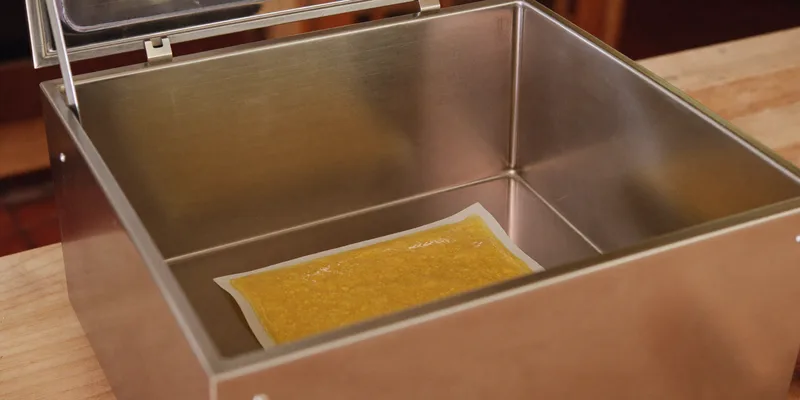
The bag goes fully inside a sealed box. Air is drawn out of the box and the bag at the same time, so the pressure on both sides of the film stays equal until the seal bar closes. Nothing is being pulled through the mouth of the bag, which is why liquid stays put. Avid Armor describes exactly this equalizing behavior as the reason its Ultra Series handles liquid rich foods.
A suction machine does the opposite. It grips the bag mouth and pulls, and everything loose inside travels toward the pump. That single mechanical difference explains nearly every advantage and every drawback below.
The Four Reasons People Actually Switch
Liquids, bag cost, pack quality and throughput. Those are the reasons that show up over and over in owner accounts, and they are worth separating, because only two of them apply to a typical household and the other two apply to hunters, gardeners with a real harvest, and anyone cooking sous vide weekly.
Liquids Without a Workaround
Stock, chili, brine, marinade and anything juicy goes in as it is. No pre freezing on a tray, no folded paper towel in the bag mouth, no watching the display and stabbing the seal button early. If you have ever tried the pre freeze routine on twelve quarts of soup, this is the whole argument.
Pouches Cost Less Than Embossed Bags
Chamber machines use smooth pouches, which suppliers make thinner than embossed stock because there is no channel pattern to press into the film. That lowers the cost per bag. At ten bags a month it is noise, and at four hundred bags a season it is a meaningful chunk of the machine back.
Tighter Packs, Less Freezer Burn
Freezer burn is the complaint that sends a lot of people shopping. A chamber machine pulls a deeper and more consistent vacuum than a countertop unit, so packs come out flatter and firmer, and there is less residual air for frost to form in. Better bags help on a suction machine too, and that is the cheaper experiment to run first.
What You Give Up
Space, weight and a maintenance routine. A chamber machine is not something you tuck in a cabinet between uses, and the ones with oil pumps need the oil looked after. VacMaster lists the VP215 with a heavy duty oil pump and a shipping weight in the eighties of pounds, which is the honest scale of this category.
The chamber also caps your bag size in a way a suction machine does not. VacMaster lists the VP215 with a 10.25 inch seal bar for bags up to 10 by 13 inches. If you routinely pack a whole brisket, measure before you order, because the food has to fit inside the box, not just under the bar.
Chamber Sealers by the Kitchen They Have to Fit
Three shapes cover the home market: a compact stainless unit sized for a counter, a heavier oil pump machine built for repeated cycles, and a hybrid that also does external suction for jars and containers. Pick by chamber dimensions first and features second.
If Liquid Rich Food Is the Reason You Are Here
Avid Armor lists the USV32 with an 11.5 inch seal bar, a glass lid, side handles and an accessory hose port, and markets it directly at soups, sauces and marinades. The glass lid is worth more than it sounds, because watching the cycle is how you learn when to stop it early on a delicate item.

If You Want the Machine That Serious Home Processors Buy
VacMaster lists the VP215 with a 10.25 inch removable seal bar with a double seal wire, a digital control panel and an oil pump. It is heavy, it is deep, and it is the unit that shows up in home butchery setups where cycles run back to back for an afternoon.
If You Also Want Jars, Canisters and Containers
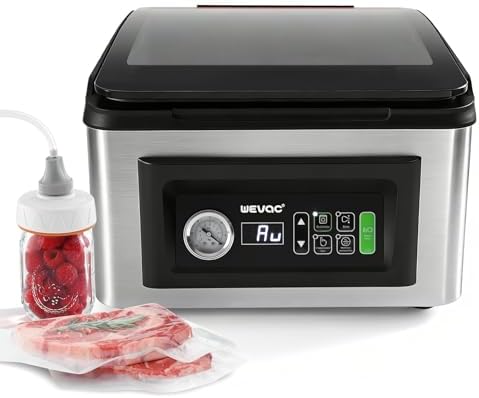
Wevac lists the CV10 as a chamber sealer with an external vacuum function and an included hose that works with accessory bags and canisters, plus an automatic mode that adjusts to the load and a manual timed mode for delicate food. That combination replaces two machines on one shelf.
Whichever You Buy, Order the Right Pouches
Smooth chamber pouches, sized to lie flat inside the chamber with the mouth across the bar. Embossed bags will technically work and you are paying for texture the machine does not use. The bag guide covers the sizing logic.

Chamber Against a Countertop Suction Machine
The comparison that matters is not power, it is which jobs each one handles without a trick. The table sorts the four differences people notice within the first month of owning either.
| Factor | Chamber machine | Suction machine | Who should care |
|---|---|---|---|
| Liquids | Sealed as is, no pre freeze | Needs freezing, moist mode or luck | Anyone canning soup or brining meat |
| Bag stock | Smooth pouches, lower cost per bag | Embossed bags, higher cost per bag | High volume users |
| Footprint | Heavy, deep, stays put | Fits in a cabinet | Small kitchens |
| Maintenance | Oil pump models need oil care | Gaskets and a drip tray | Anyone who forgets service |
If your only real complaint is freezer burn, try heavier bags and a second seal line before you buy a chamber machine. That is the cheap version of the same fix, and it works more often than the forums suggest.
What a Chamber Machine Does Not Change
It does not make food shelf stable. A deeper vacuum removes more oxygen, and the National Center for Home Food Preservation is clear that vacuum packaging is not a substitute for canning. USDA guidance on reduced oxygen packaging notes that low oxygen conditions favor Clostridium botulinum, which does not need air at all.
So a sealed quart of stock is a freezer item or a refrigerator item, not a pantry item. For food on a shelf at room temperature you want pressure canning for low acid foods, or drying, and we compare the routes in vacuum sealing against canning.
Frequently Asked Questions
Can a chamber sealer use FoodSaver bags? Yes, but there is no benefit. Embossed bags cost more and the chamber does not use the channels. Order smooth pouches sized to your chamber instead.
Do I need an oil pump model? Only if you run long back to back sessions. Oil pumps handle sustained cycles well and need oil changes. Dry pump models skip the maintenance and are generally happier with lighter use.
Will a chamber machine stop freezer burn completely? It reduces it substantially by leaving less residual air in the pack, and no packaging method removes the risk entirely over a long enough storage period. Rotate your freezer and label everything.
Can I seal jars with a chamber machine? Only if the model has an external vacuum port and hose, like the Wevac CV10 or the accessory hose on the Avid Armor units. For jar work specifically, see the jar sealer guide.
Is a chamber machine better for sous vide? For wet marinades, yes, because the bag can go in with the liquid. For plain proteins a good countertop machine is fine, which we cover in the sous vide guide.
The Bottom Line
Buy a chamber machine for liquids and for volume. If soup, stock, brine or marinade are part of your routine, nothing else does the job cleanly, and if you are sealing hundreds of packs a year the cheaper pouches quietly pay you back. If you seal a dozen dry bags a month, a countertop machine with a moist setting and better film is the right call and the right price. Measure your shelf and your usual pack size before you order, because the chamber, not the seal bar, is the real limit. Read next: how to seal liquids without a chamber machine and the full sealer type comparison.