Last updated: August 23, 2026
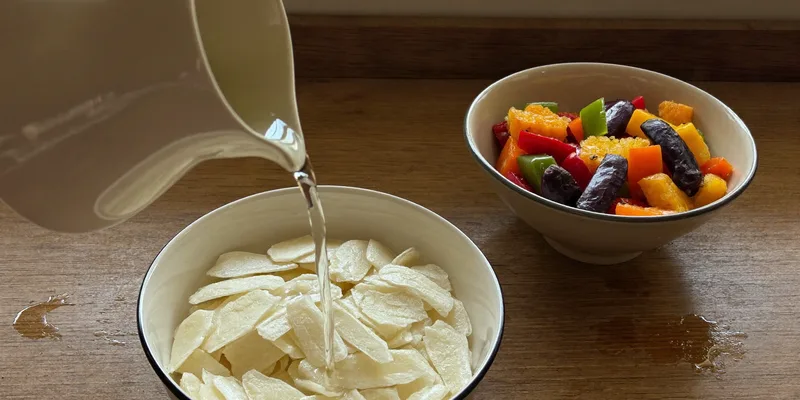
The first time you open a jar of home freeze dried chicken and try to turn it back into dinner, the temptation is to drown it. Most people pour on far too much water, wait, and end up with something waterlogged at the edges and still crunchy in the middle. Then they conclude that freeze dried food is a compromise, when the actual problem was the ratio and the temperature of the water.
Rehydrating is easy once you understand what you are working with. Freeze dried food is a dry sponge with its original structure intact, which is exactly why it takes water back faster and more completely than anything from a dehydrator. This page covers the ratios worth starting from, the timing, the foods that need care rather than speed, and the safety rules that apply once meat and eggs enter the picture.
This article contains affiliate links. If you buy through them, we may earn a commission at no extra cost to you. Learn more.
Quick Answer
How do you rehydrate freeze dried food properly?
- Start with less water than you think, then add. It is easy to add and impossible to remove.
- Hot water is faster. Cold water works for fruit and anything delicate.
- Freeze dried is quick. Minutes, not the hour or two that dehydrated pieces often want.
- Long soaks belong in the refrigerator, and anything with meat or egg gets cooked afterward.
Bottom line: add water gradually, use the soaking liquid in the dish, and never treat a soak as a substitute for cooking.
Where to Start With Ratios
Published guidance for dried foods gives a useful anchor. The National Center for Home Food Preservation’s drying information suggests using roughly twice as much water as dried food and allowing one to two hours to reconstitute, covering the food and refrigerating it for longer soaks, and using the soaking water in cooking so the vitamins go into the dish rather than down the drain.
Freeze dried food generally needs less water and much less time than that, because the pores are open and the structure never collapsed. In practice most people start close to equal parts by volume, wait a few minutes, and add more only if the pieces are still firm. That is the safest direction to make a mistake in.
Why Too Much Water Ruins More Batches Than Too Little
Rehydrated food cannot give water back. Vegetables that soaked in an excess turn to mush, meat goes spongy, and powders turn to slurry. Underdone food, on the other hand, just needs another minute. Pour short, stir, and let time do the rest.
Food by Food
Different foods want different treatment, and the split is mostly about density and fat. Fruit barely needs rehydrating at all, vegetables prefer to rehydrate inside the dish they are going into, and meat wants hot liquid and then heat. The table gives a starting point for each, to be adjusted once you know your own batches.
| Food | Where to start | Method | Note |
|---|---|---|---|
| Fruit | Little or no water | Eat dry, or a short cold soak | Best texture is often the dry one |
| Vegetables | Roughly equal volume, then adjust | Add straight to soup or sauce | They rehydrate in the pot for free |
| Cooked meat | Equal volume of hot broth | Soak briefly, then heat through | Broth beats water for flavor |
| Egg powder | Whisk to a batter consistency | Rest a couple of minutes, then cook | Cook fully, never use raw |
| Full meals | Follow the water line you noted | Boiling water, cover, stir once | Write the ratio on the bag when you pack it |
| Herbs and powders | None | Add directly to the dish | Rehydrating first only loses aroma |
The Safety Part, Kept Short and Sourced
Two rules cover almost everything. First, a long soak belongs in the refrigerator rather than on a warm counter, which is exactly what NCHFP advises for reconstituting dried foods. Second, rehydrating is not cooking. Adding water to dried meat or egg returns it to a moist state at a comfortable temperature, which is the condition bacteria like best.
For eggs specifically, USDA FSIS advises using pasteurized eggs or egg products in recipes where eggs are raw or undercooked and heating egg mixtures to 160 degrees F, and home freeze drying does not pasteurize anything. Cook meat and egg dishes through, and use a thermometer for the same foods you would check when cooking them fresh.
Water Quality Matters on the Trail
If you are rehydrating a backpacking meal, the water going into the bag is the water you are eating. Treat or boil it the same way you would for drinking, because a dry meal is sterile only until you add whatever came out of the creek.
Hot, Cold, and How Long to Wait
Hot water rehydrates faster and works best for meat, beans, rice dishes and anything that will be served warm. Cold water is slower and gentler, and it suits fruit, delicate vegetables and anything you want to keep firm rather than soft. Neither is wrong, they simply produce different textures.
Give the food a stir partway through, because dry pieces float and clump, and the ones on top can stay dry while the bottom of the bowl turns to soup. One stir usually fixes an entire batch that looked like it was rehydrating unevenly.
Storing What You Did Not Use
Rehydrated food is ordinary perishable food again, so it goes in the refrigerator and gets used within a couple of days, or into a cooked dish that gets frozen. There is no route back to shelf stable once water has gone in.
The dry remainder is the part that needs attention. Every time a bag is opened it takes in air, so move an opened bag’s contents into a smaller sealed container, or portion in advance so you only ever open what you need. Jars are convenient for the kitchen, mylar with an absorber is the long term answer.

Frequently Asked Questions
How much water do I actually need? Start near equal parts by volume for freeze dried food and add from there. The commonly published guidance of about twice as much water as dried food comes from NCHFP’s advice for dried foods generally, and it is a ceiling rather than a target for freeze dried pieces, which take water back much faster.
Why is my rehydrated meat rubbery? Usually too much time in water and not enough heat afterward. Give it a short soak in hot broth and then bring the dish up to temperature rather than leaving the meat sitting in warm water. Meat that was very lean before drying will always be firmer than fatty cuts.
Can I rehydrate on the counter overnight? No. NCHFP’s guidance for longer soaking is to cover the food and put it in the refrigerator, and that is the right habit for anything containing meat, egg or dairy. Room temperature soaking for hours is how you turn preserved food into a food safety problem.
Do I have to rehydrate at all? Often not. Freeze dried fruit, vegetables in a simmering soup, and herbs in a sauce all do fine going in dry. Rehydrating is for when texture matters, such as meat in a stew or vegetables in a stir fry.
Why does my freeze dried food taste flat after rehydrating? Because the flavor went into the water. Use broth instead of plain water, salt the dish rather than the soak, and use the soaking liquid in the recipe, which is exactly what NCHFP recommends for keeping the nutrients as well.
The Bottom Line
Rehydrating freeze dried food means adding less water than you expect, using hot liquid when you want speed and cold when you want firmness, stirring once, and cooking anything with meat or egg in it afterward. Keep long soaks in the refrigerator as NCHFP advises, use the soaking water in the dish, and reseal the dry remainder properly. For the storage side see mylar bag sizing and absorber capacity, and if you are still deciding between machines, our comparison covers which foods each one suits.